
How Do they Do It?
On Making It (and making a profit)

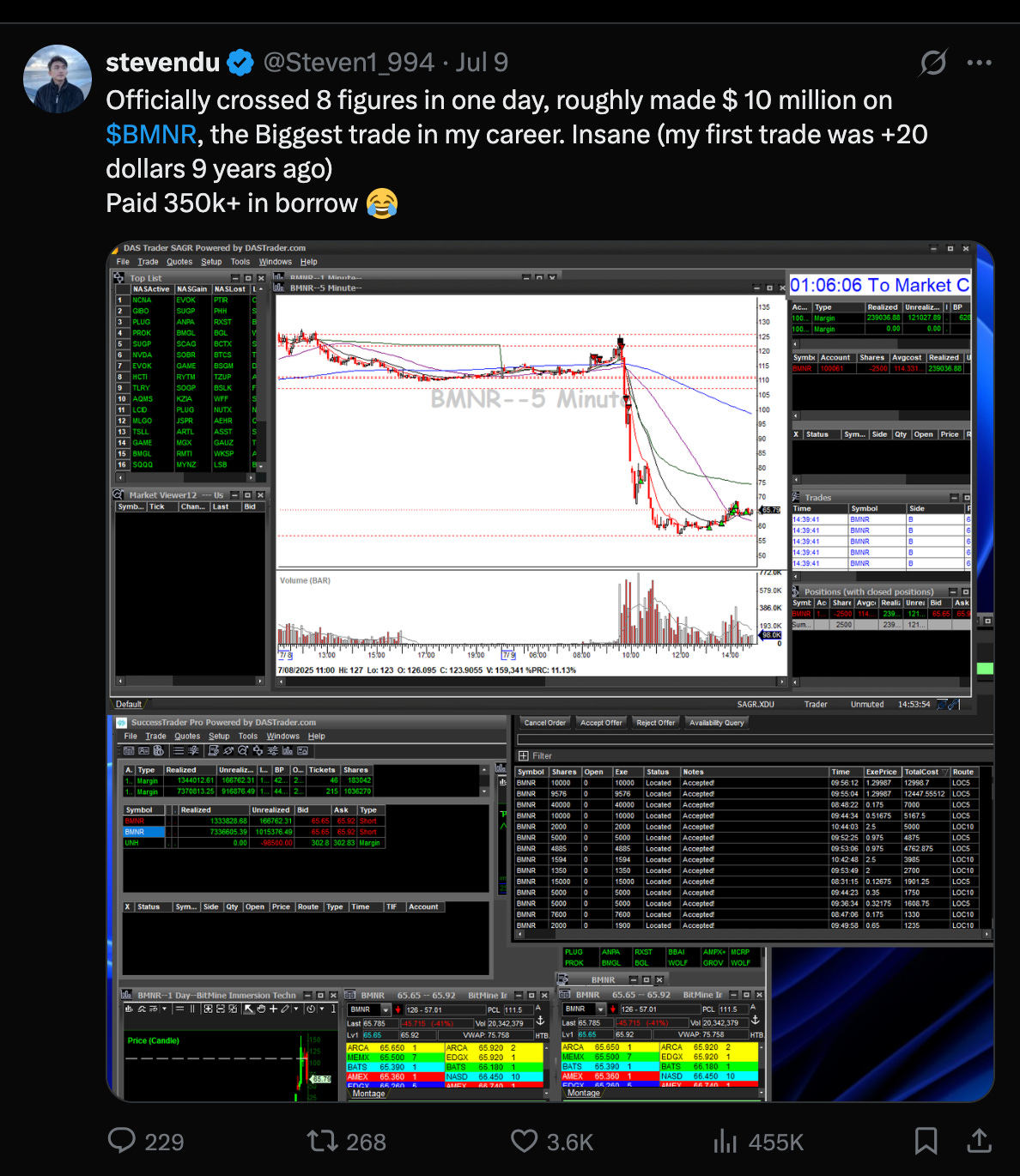
The Setup—BMNR
This week Steven Dux, who I don’t know and had never heard of before, boasted about a $10 million trade he made in BMNR, a company affiliated with Bitcoin mining. BMNR had been rising all week, going from around five dollars on June 30th to an unprecedented top of over $160 on the 3rd of July.
Then it fell.
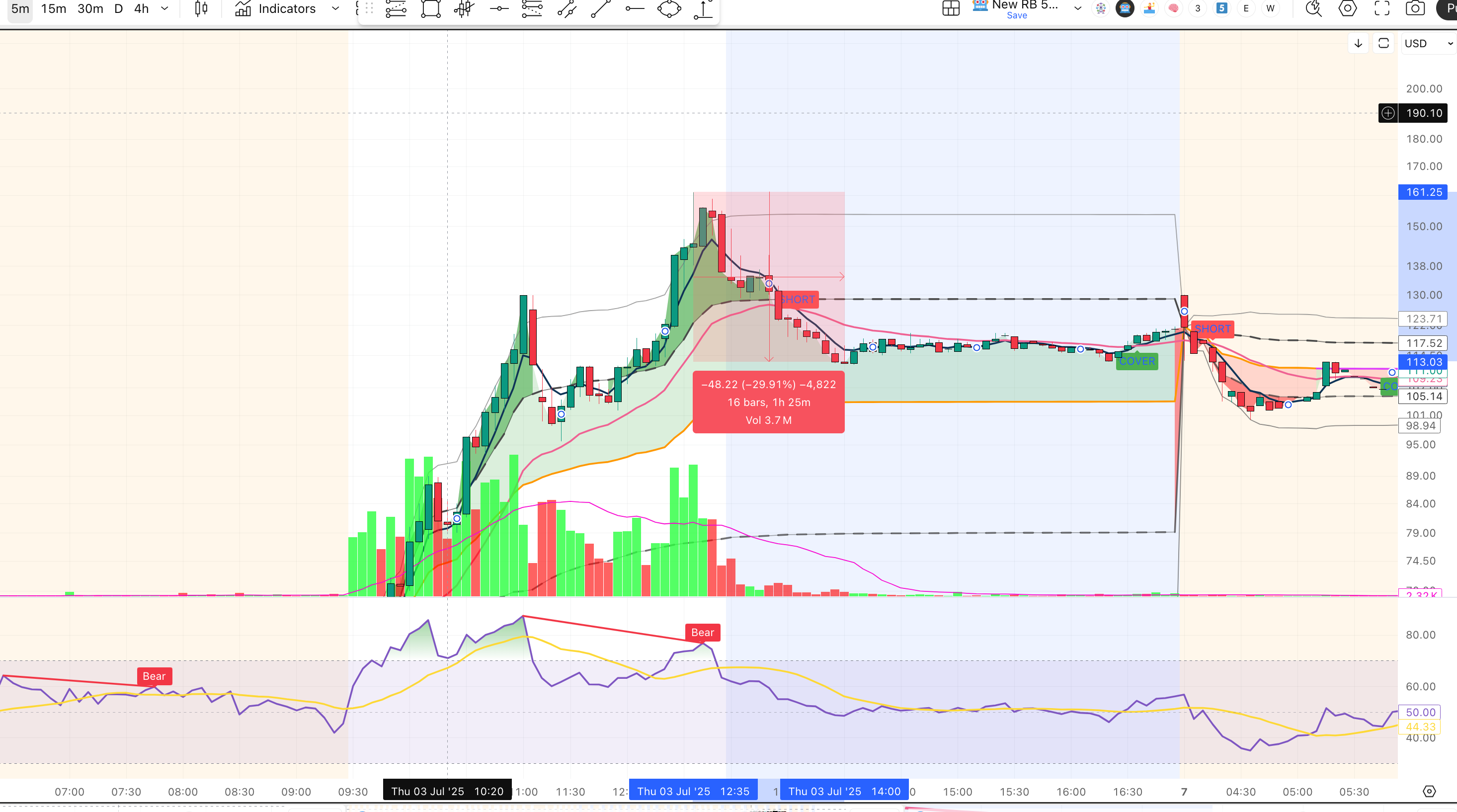
This thing had to break—and break it did. First on the 3rd, and again on the 9th, losing nearly 30% at first, and then another 50%. On the 3rd, from its high of 161 at 12:35 PM (the day before the holiday was a half-day, so the market closed at 1 PM), BMNR dropped nearly $50. A few people must have gotten the trade, but I certainly didn’t. With the ticker’s parabolic acceleration, I was staying clear of it.
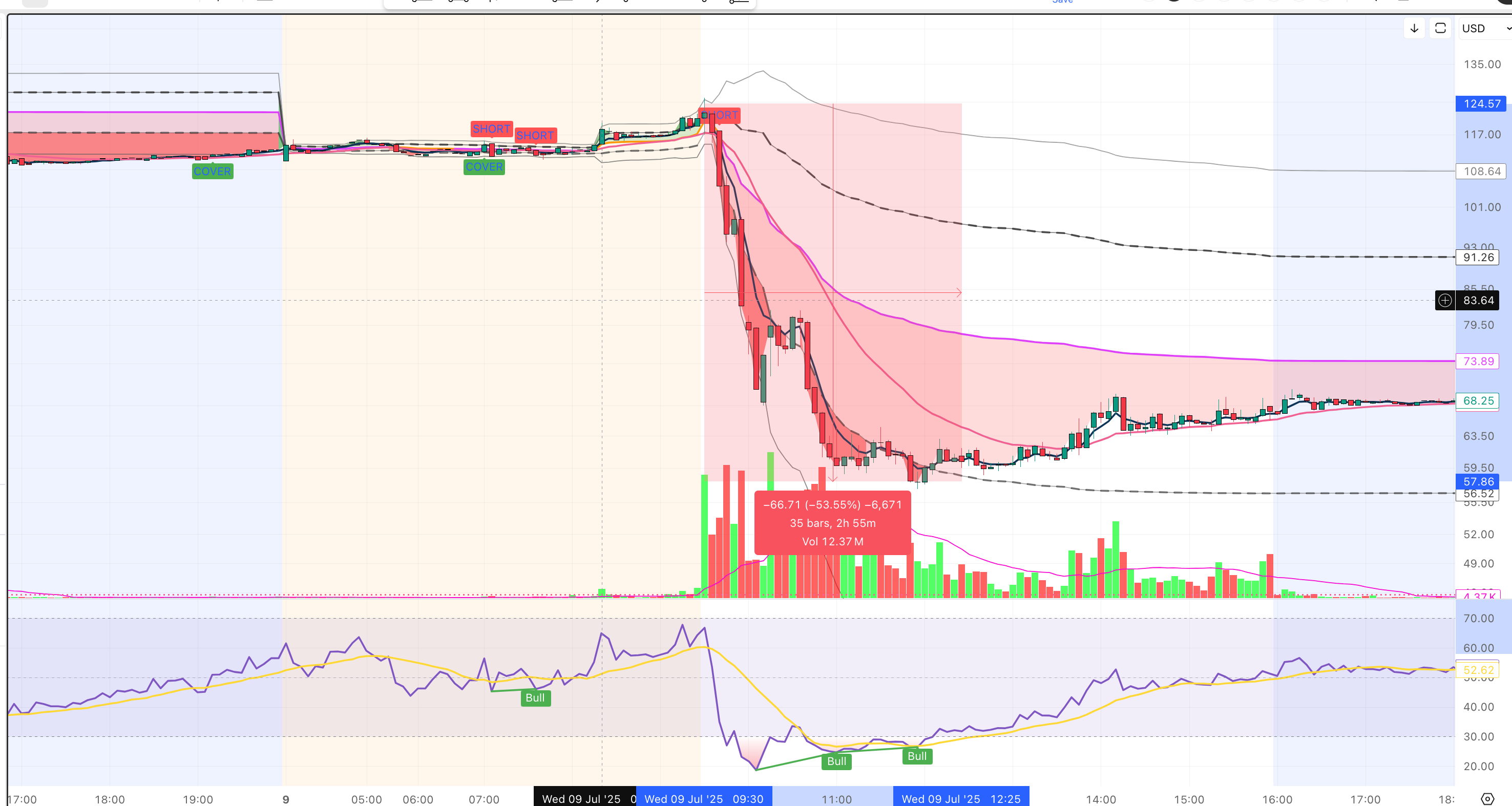
And then BMNR did it again six days later. After spending the week stabilizing around $120, it dropped from $121 to just under $60 in under two hours—just after the open. That’s where Dux made his money—but again, I stayed clear.
How Do They Do It?
I’m not especially interested in how overweight the crypto speculative game is. I mean—I am—but there are plenty of people who write better than I do and know far more, who have weighed in on this. You can read them for yourself.
And of course, the more you bet, the more likely you are to make more… or to lose more. On some volatile stocks, when you “borrow” a stock to short, you pay a fee. For example, when I borrow 100 shares of something, I might pay one or two dollars—and rarely more. Think of it as interest. Dux paid over $350,000 in borrowing fees alone. That means even if he didn’t take a trade, he would be down $350K. Put another way—he had to make $350K just to break even.
Again, I’m not especially interested in Dux’s trade. From the outside, it seems wildly speculative and not a sure “bet” at all. Perhaps he knew what he was doing. I’ll never know. I wish him all the best, and hope he finds a way to spend that money to benefit those with less. Considering his website has him sitting on the back of a Lamborghini, I have my doubts.
The Work in Front of Me
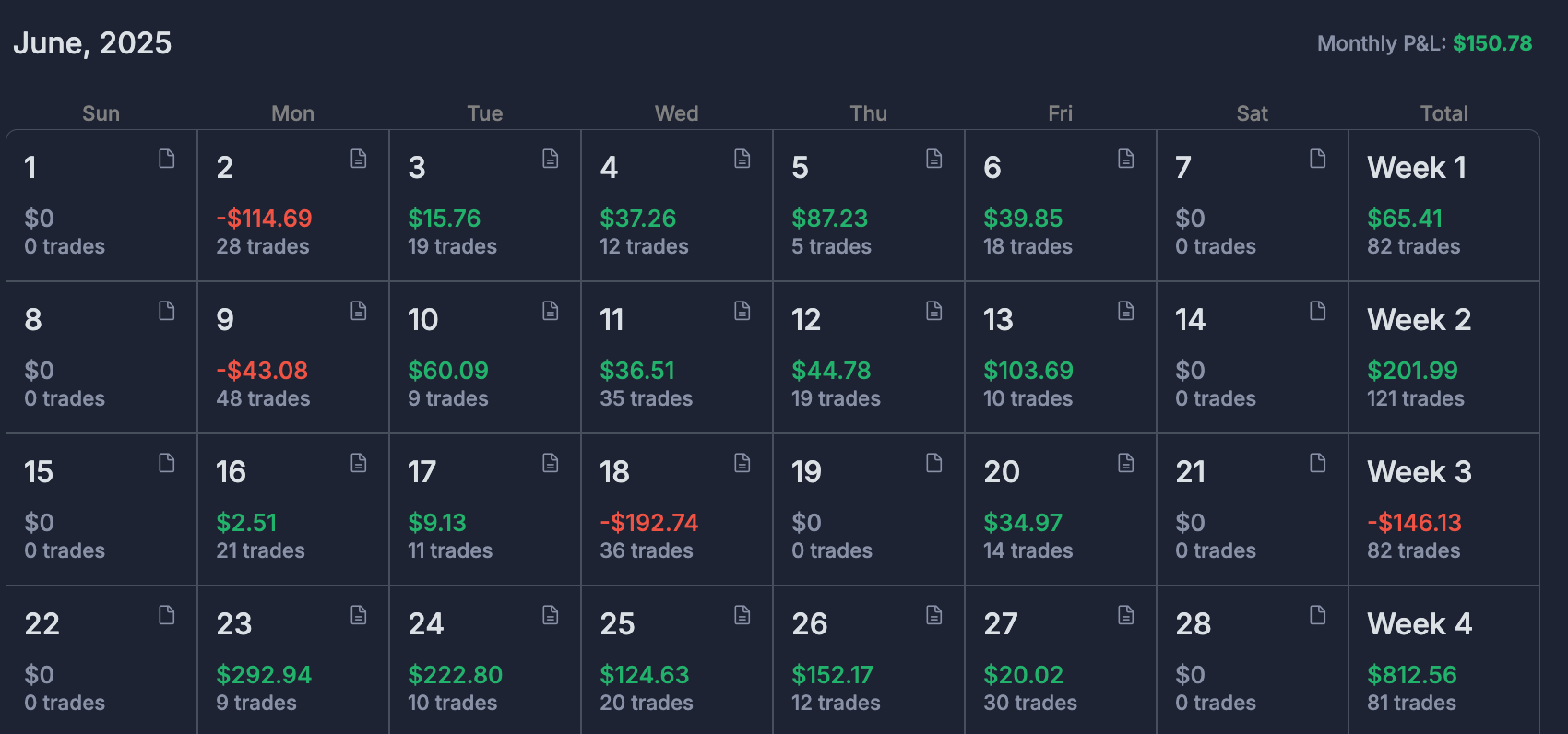
For myself, I’m struggling to find a consistent practice of even making $500 a day, and I’m still some ways from that. The challenge is there, and the difficulty is there as well. I’m at the stage where I can have upwards of $1,000 go through me in a day. Some days I’m up $500, and some days I’m down $700. Mostly, to be honest, I’m down—though last month was my first green month.
Mike Bellafiore, who has been one of my trading teachers, writes about focusing on taking “One Good Trade, then another One Good Trade.” The way to do that is through returning, always, to the fundamentals.
What are the fundamentals? Proper preparation, hard work, patience, detailed plans, discipline, communication, and review.
In another post I’ll review these in depth.
For me, though, I take some refuge in his words. I am working hard—leaning into the mystery of trading versus the mystery of philosophy (another post idea!), occasionally having patience and building a plan, occasionally practicing discipline, and often reviewing my trades. And so I return again to patience, right?
Until I can hit more consistency—say, by having a few green months in a row—I need to restrict myself. No million-dollar trades this month. I’m surprised to find myself so conservative. I used to be the one at the poker table taking big risks. But the poker table feels different. I wasn’t trying to support my family, and I wasn’t trying to make money to give away to change other people’s lives—it was just a game.
This isn’t.
And it doesn’t feel like a game. Though at times, when I bring the “infinite game” attitude, I tend to do better—I feel lighter, less conflicted.
So, return to the fundamentals, and ignore the noise of Lamborghini-driving $10 million traders. Take the One Good Trade, take the next one, and stay with it.
What Makes It Worth It
John Stuart Mill writes somewhere that any good is always better when done for others. I’m paraphrasing—and probably mangling the quote—but (another post for another time) I strongly believe that principle has to underpin any One Good Trade.
Truth to say, I’m not sure I want to make $10 million in a single trade… unless I could immediately feed a bunch of people with it, or change the world for others—even if not for myself. That would make it worth it.
One good one, and then the next. Wishing this for you♥️